Key points
- Your stomach is a stretchy bag that holds and mixes your food.
- Cancer happens when some cells stop following the body's rules and keep multiplying.
- Most stomach cancers start in the inner lining. Doctors call this type adenocarcinoma.
- Stomach cancer is more common in East Asia than in Malaysia, and more common in men and older adults.
Where is the stomach and what does it do?
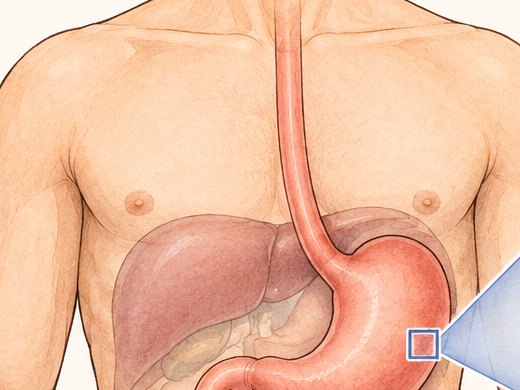
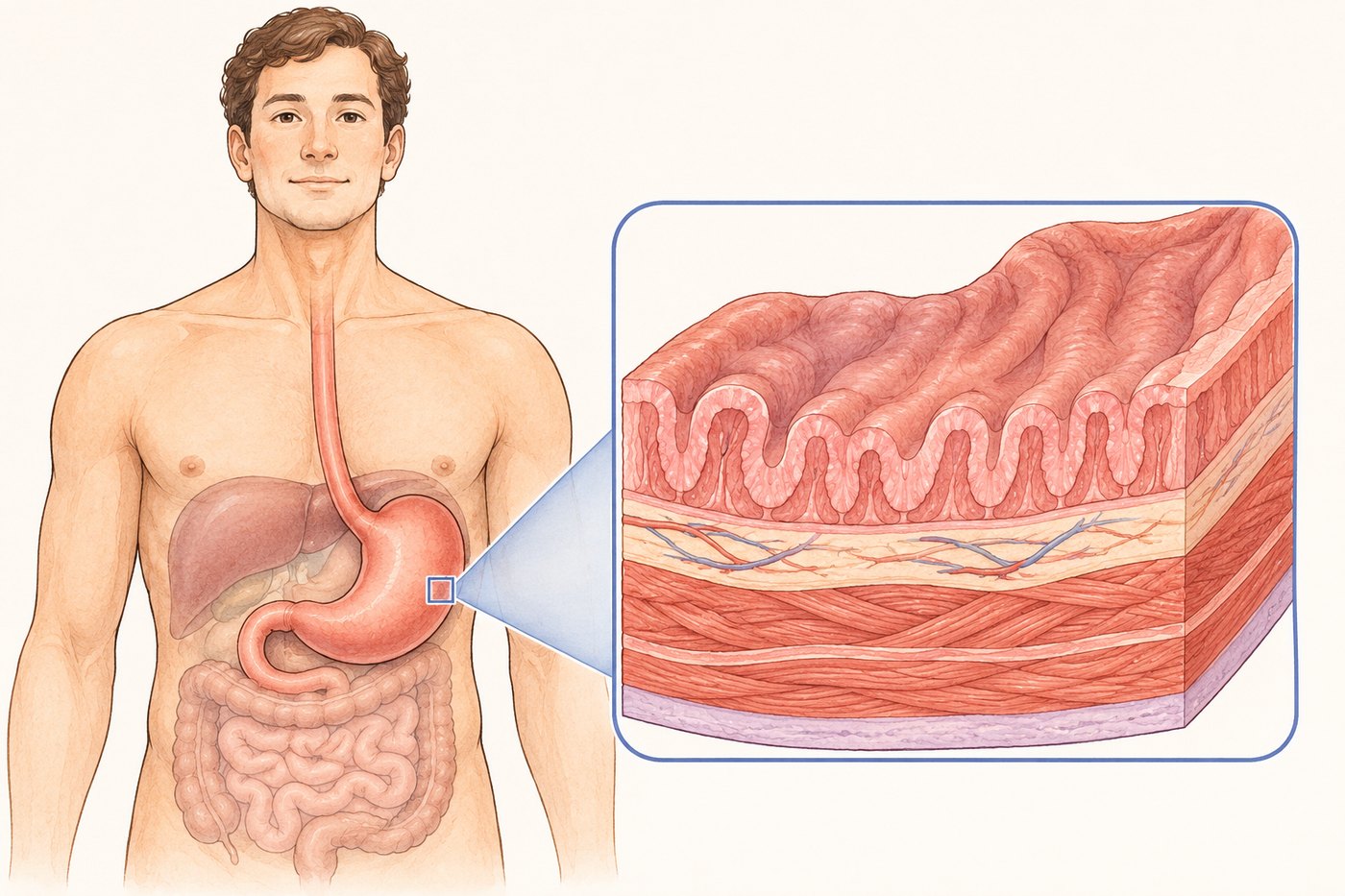
Your stomach sits in the upper tummy, just under the ribs on the left. Food comes down the food pipe, and the stomach churns it with acid before passing it to the gut. The stomach wall has layers, like the layers of an onion.
What is cancer?
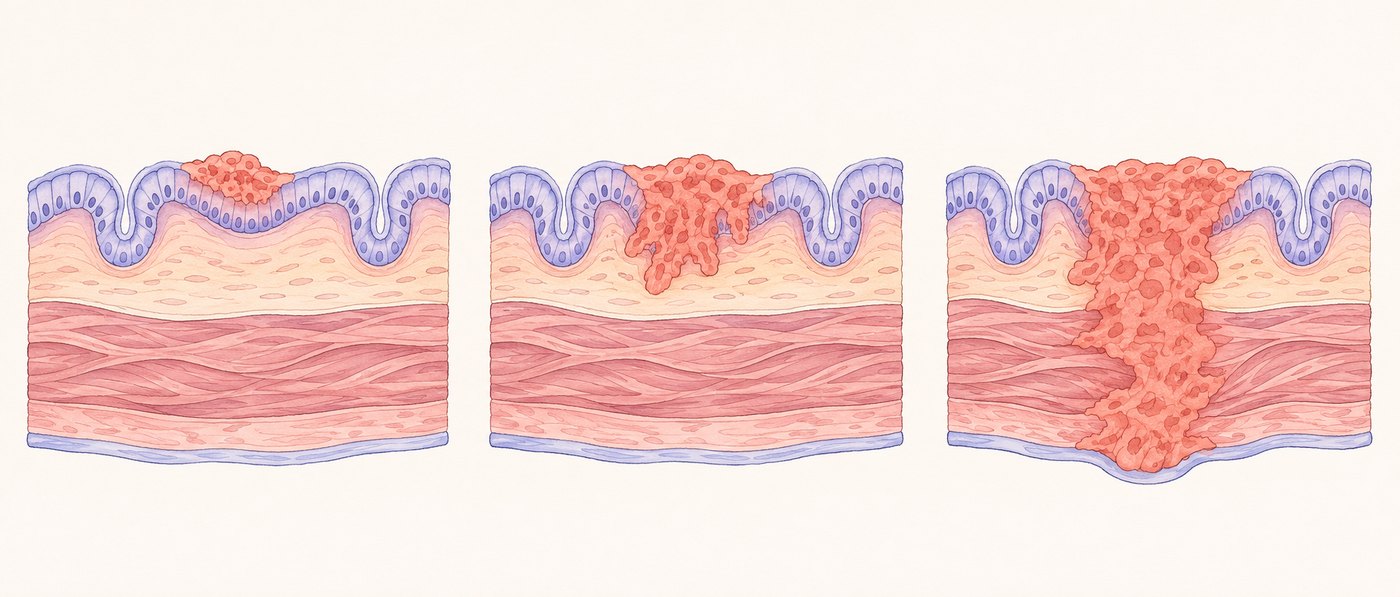
Your body is made of tiny building blocks called cells. Normally, cells grow, do their job and are replaced in an orderly way. In cancer, some cells stop obeying the rules. They keep multiplying and form a lump called a tumour. Over time the tumour can grow deeper into the stomach wall and may spread to other parts of the body.
Are all stomach cancers the same?
No. Most are adenocarcinomas, which start in the lining. This site is mostly about that type. A different kind of tumour, called GIST, starts in the wall of the stomach and is treated differently. It has its own page.
How common is stomach cancer in Malaysia and worldwide?
- Around the world, close to one million people were found to have stomach cancer in 2022. It is the fifth most common cancer worldwide1.
- In Malaysia it is less common. It is not among the ten most common cancers in the national registry for 2017 to 20212.
- Among Malaysians, it is seen more often in people of Chinese descent and less often in people of Indian descent. Researchers are still studying why3, 4, 5.
- In Malaysia many people are diagnosed late, when the cancer has already grown or spread3. This is one reason why knowing the warning signs matters.
Want more detail?
- Worldwide, stomach cancer made up 4.9% of new cancer cases and 6.8% of cancer deaths in 20221.
- A Malaysian lecture review reported stomach cancer rates of more than 20 per 100,000 per year in ethnic Chinese and under 10 per 100,000 in ethnic Indians, despite Indians having a high rate of H. pylori infection. This puzzle is called the "Indian enigma"4.
- One Malaysian hospital study found H. pylori infection fell from 51.7% to 11.1% of patients tested over 20 years, alongside a fall in stomach cancer6.
- Doctors group adenocarcinomas by where they start (near the food pipe, or lower down) and by how they look under the microscope (intestinal or diffuse type). Scientists also describe four molecular groups: EBV-positive, microsatellite-unstable, genomically stable and chromosomally unstable17.
Common questions
Is stomach cancer the same as "gastric"?
In Malaysia, people say "gastric" for stomach pain or indigestion. Doctors use "gastric cancer" to mean stomach cancer. Ordinary gastric pain is very common and is usually not cancer.
Is stomach cancer inherited?
Usually not. A small number of families carry a gene change that raises the risk. See the Risk factors page.
Can stomach cancer be cured?
When found early, it can often be treated with the aim of cure. The chance depends mainly on the stage.
References
- Bray F, et al. Global cancer statistics 2022: GLOBOCAN estimates of incidence and mortality worldwide for 36 cancers in 185 countries. CA Cancer J Clin 2024;74(3):229–263. doi:10.3322/caac.21834
- National Cancer Registry Department, Institut Kanser Negara, Ministry of Health Malaysia. Malaysia National Cancer Registry Report 2017–2021. Report (PDF). nci.moh.gov.my
- Lim, et al. A review of gastric cancer research in Malaysia. Asian Pac J Cancer Prev 2019;20(1):5–11. doi:10.31557/APJCP.2019.20.1.5
- Goh KL. Lessons learnt from the epidemiology of Helicobacter pylori infection in Malaysia: JGHF Marshall and Warren Lecture 2017. J Gastroenterol Hepatol 2018;33(6):1177–1184. doi:10.1111/jgh.14131
- Htet, et al. Clinicopathological study of gastric cancer in a Malaysian tertiary public health care centre. Med J Malaysia 2023;78(5):616–620. PubMed 37775488
- Leow, et al. Time trends in upper gastrointestinal diseases and Helicobacter pylori infection in a multiracial Asian population: a 20-year experience over three time periods. Aliment Pharmacol Ther 2016;43(7):831–837. doi:10.1111/apt.13550
- Cancer Genome Atlas Research Network. Comprehensive molecular characterization of gastric adenocarcinoma. Nature 2014;513(7517):202–209. doi:10.1038/nature13480
For general education only. Not a substitute for consultation with a qualified doctor. Not a diagnosis or treatment advice.
If you have urgent symptoms such as vomiting blood, black tarry stools, severe tummy pain, fainting or difficulty breathing, go to the nearest emergency department or call 999.